In short: set an asking rent by finding what comparable space nearby is advertised and let for, converting those figures to a rent per square foot (or per square metre) per year, and adjusting for how your unit compares. The main factors are condition, access, facilities and location. Then decide what the rent includes, whether VAT applies, and how often it is paid. Check that the total monthly cost to a tenant is realistic for the businesses you want to attract. If the unit is large or unusual, a RICS-registered valuer can advise.
The rent you choose decides who enquires. Too high, and a good unit sits empty while you pay business rates on it. Too low, and you leave money on the table for the length of the lease. This guide sets out a straightforward method you can work through in an afternoon.
Step 1: Measure the unit properly
Rent for commercial space is usually compared per square foot per year (or per square metre in some areas). You need an accurate floor area before you can compare anything.
- Measure the internal floor area wall to wall, excluding thick internal walls, columns and areas the tenant cannot use.
- Measure mezzanines and yards separately. They are usually valued at a lower rate than the main floor.
- Note the eaves height and the door width and height. For storage and workshops, they matter almost as much as floor area.
One square metre is about 10.76 square feet. FarmUnits accepts square feet and shows the metric equivalent.
Step 2: Find comparable rents
Look for units let or advertised near you that are similar in type and size. Good sources include:
- listings on FarmUnits and other property sites for workshops, storage and offices within 10 to 15 miles;
- commercial agents' particulars, many of which give rents per square foot;
- neighbours and other farms that already let buildings;
- local land agents and surveyors, who see rents agreed, not just asked.
Write down each comparable's floor area, rent, what the rent includes, and its condition and facilities. Convert each to a rent per square foot per year:
Annual rent ÷ floor area in sq ft = rent per sq ft per year
For example, a 1,200 sq ft unit advertised at £800 a month is £9,600 a year, or £8.00 per sq ft.
Remember that asking rents are not always achieved. Units that have been advertised for months are probably priced too high.
Step 3: Adjust for your unit
Compare your unit with the comparables and adjust upwards or downwards. The things tenants pay more for:
| Factor | Higher rent | Lower rent |
|---|---|---|
| Condition | Insulated, lined, lit, clean | Basic, unlined, dark, needing repair |
| Access | Wide gate, HGV-suitable, near a main road | Narrow lane, shared yard, steep or rough track |
| Doors and height | Roller shutter, high eaves | Small doors, low eaves |
| Power | Three-phase, separately metered | Limited single-phase, shared |
| Facilities | Toilet, kitchen, broadband, parking | None |
| Security | Gated site, CCTV, lighting | Open yard, isolated |
| Location | Close to a town and customers | Remote |
| Flexibility | Short or flexible terms | Long minimum term |
A building that is sound but basic will usually let at a discount to purpose-built industrial units. Do not assume it should match a modern business park.
Step 4: A worked example
The figures below are illustrative only. Rents vary widely across the UK, so use your own comparables.
Suppose you have a 1,000 sq ft steel workshop with a roller shutter, single-phase power and parking, ten minutes from a market town. You find three comparables:
- a modern 1,500 sq ft unit on a business park at £9 per sq ft, with three-phase power;
- a 900 sq ft farm workshop on another farm at £7 per sq ft, with a toilet;
- a 1,200 sq ft basic barn used for storage at £5 per sq ft.
Your unit sits between the farm workshop and the basic barn. It has a better door than the barn, but no toilet and only single-phase power. An asking rent of around £6–£6.50 per sq ft, or £6,000–£6,500 a year (£500–£540 a month), would be a reasonable starting point. You could then test the market.
Step 5: Decide what the rent includes
Two units at the same headline rent can cost a tenant very different amounts. State clearly:
- Business rates: normally paid by the tenant. Small units may qualify for small business rate relief, which can reduce the bill to nothing and makes your unit more attractive. See what the 2026 revaluation means for farm units.
- Utilities: electricity, water and broadband, either included, recharged from sub-meters, or arranged by the tenant.
- Service charge: a contribution towards shared costs such as maintaining the track, gates, lighting and shared toilets.
- Insurance: the landlord usually insures the building and recharges a share to the tenant. The tenant insures their contents.
- Repairs: who is responsible for what. Small farm lets often place internal repairs on the tenant and the roof and structure on the landlord.
Step 6: VAT, payment and deposit
- VAT: rent on commercial property is exempt from VAT unless you have opted to tax the building. If you have, you must charge VAT on the rent. Many small businesses cannot reclaim VAT, so it adds 20% to their real cost. Say clearly whether your rent is "plus VAT".
- Payment frequency: monthly in advance is usual for small rural units. Quarterly in advance is common for larger ones.
- Deposit: a rent deposit of one to three months is usual for small business lettings, held under a simple deposit deed.
- Rent reviews: for leases longer than two or three years, agree how and when the rent will be reviewed, for example in line with inflation or to open market value.
Step 7: Check the total cost to the tenant
Add up rent, VAT if applicable, a realistic estimate of business rates, utilities and service charge. Then ask yourself whether a local joiner, contractor or online retailer could afford that each month. If the total looks high for the kind of tenant you expect, it is better to adjust before you advertise than after weeks without enquiries.
Step 8: Test the market and review
Advertise at your chosen rent with clear details and good photographs, and watch the response:
- Many enquiries quickly: your rent may be on the low side. You can be more selective about tenants, or consider a slightly higher rent for the next unit.
- Steady, suitable enquiries: you are about right.
- Few or no enquiries after four to six weeks: check your listing, photographs and rent against the competition again.
Remember the cost of an empty unit. Once a building is let for business use, empty rates may become payable after a short rate-free period. Every month empty is a month's rent you will not get back.
Storage, yards and per-space pricing
Not everything is priced per square foot.
- Vehicle, caravan and boat storage: often charged per space or per vehicle per month.
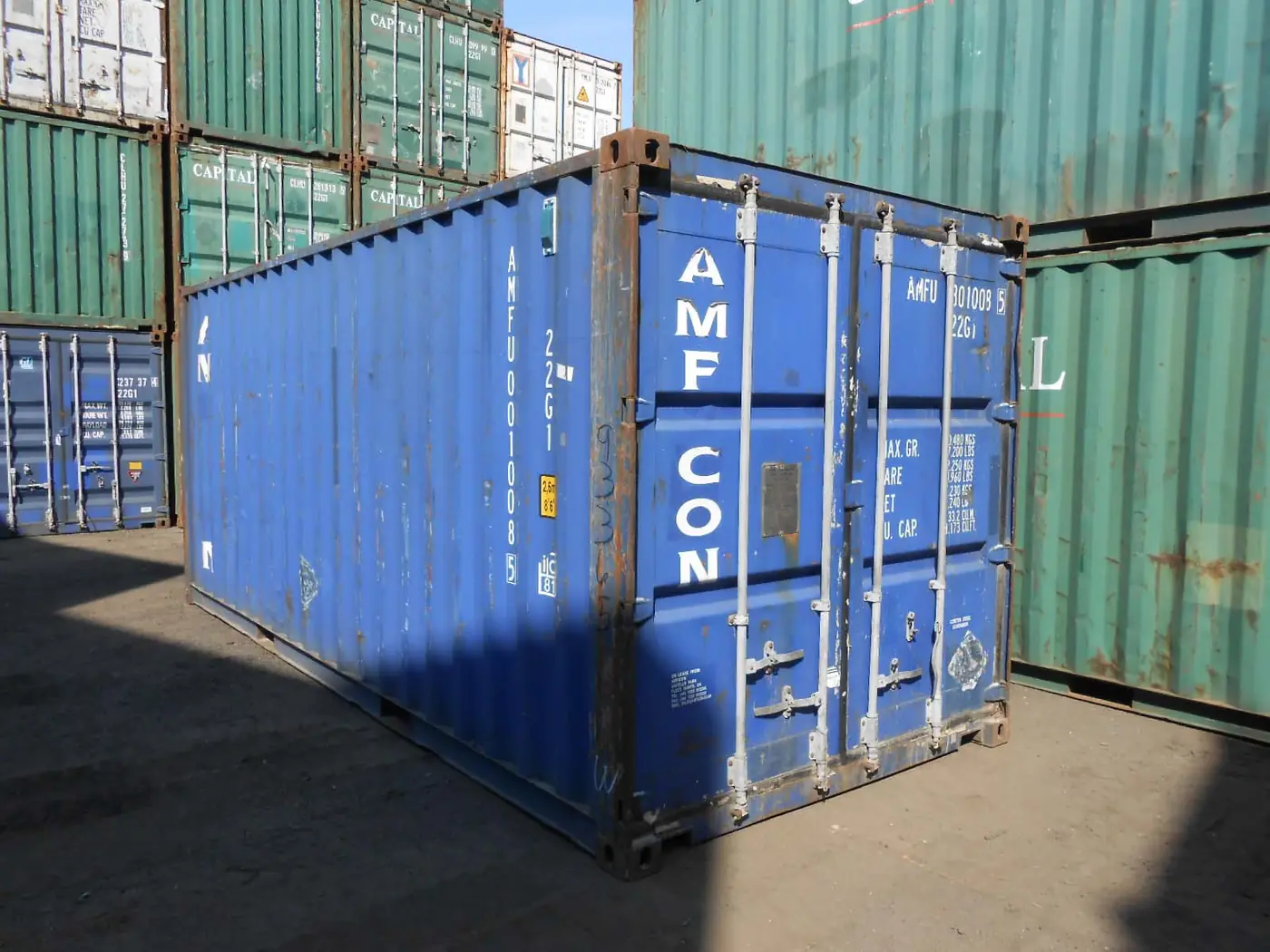
- Container storage: usually a fixed monthly rent per container.
- Yards: often priced per acre or per square foot at a lower rate than buildings.
Check what similar local storage charges, and make clear whether access is 24-hour or restricted.
Frequently asked questions
How much rent can I get for a farm building?
It depends on location, size, condition, access and facilities. Rents for basic rural storage are usually well below those for modern business park units, while converted offices can command much more. The most reliable guide is what comparable space near you is let for, converted to a rent per square foot per year.
How do I calculate rent per square foot?
Divide the annual rent by the floor area in square feet. A 1,000 sq ft unit let at £6,000 a year is £6 per sq ft per year. Use the same calculation for comparable units so you can compare like with like.
Do I have to charge VAT on rent for a farm unit?
Not unless you have opted to tax the building. Commercial rent is exempt from VAT by default. If you opt to tax, often to reclaim VAT on conversion costs, you must then charge VAT on the rent.
Who pays business rates on a rented farm unit?
The tenant normally pays business rates as the occupier. Many small units qualify for small business rate relief, which can reduce the bill significantly or entirely. The owner usually pays when the unit is empty, after any rate-free period.
Should I use a surveyor to set the rent?
For a single small unit, the comparables method in this guide is usually enough. For larger buildings, multi-unit schemes, or where you are unsure of the market, a RICS-registered valuer or local land agent can give a professional opinion of rental value.
Next steps
When you have a figure, put it in your listing with a clear statement of what it includes. Create your free FarmUnits listing. For the rest of the process, see how to rent out an unused farm building.
This guide is general information, not valuation, legal or tax advice. Example figures are illustrative only and are not market evidence.
Photo credits
Photographs are reproduced under Creative Commons licences and have been resized and cropped.
- Business Units at Hill Farm by Peter Wood, licensed under CC BY-SA 2.0
- Ridge Farm and industrial units by Dave Spicer, licensed under CC BY-SA 2.0
- Farm business units by Roger Jones, licensed under CC BY-SA 2.0
- 20 Foot Shipping Container Storage Yard by IPLManagement, licensed under CC BY-SA 4.0


